

Corporations have certain characteristics that make them distinct from other business structures. These characteristics include having a long lifespan, being appealing to investors, issuing dividends, having limited liability, and ownership based on the acquisition of shares. In other words, the corporation and its assets are liable in case of a lawsuit or a debt, not the personal assets of its owners. A corporation’s distinct legal existence is a foundational principle that sets it apart from other business entities.
- This analysis helps businesses allocate resources efficiently, maximizing returns.
- Corporate tax rates vary by country and region, influencing where businesses choose to operate.
- The board hires and oversees the senior management responsible for the corporation’s day-to-day activities.
- You might want to batten down and brace yourself personally and as early in the cycle as possible if you do detect a contraction coming on.
- Here are some examples of introduction to business economics for better comprehension.
- Corporations are one of the most common types of business structures worldwide and come in various forms, each serving different purposes based on the size of the business, ownership structure, and goals.
- Published periodically by governmental agencies or private organizations, economic indicators often have a considerable effect on stocks, employment, and international markets.
Regulatory Compliance for Corporations
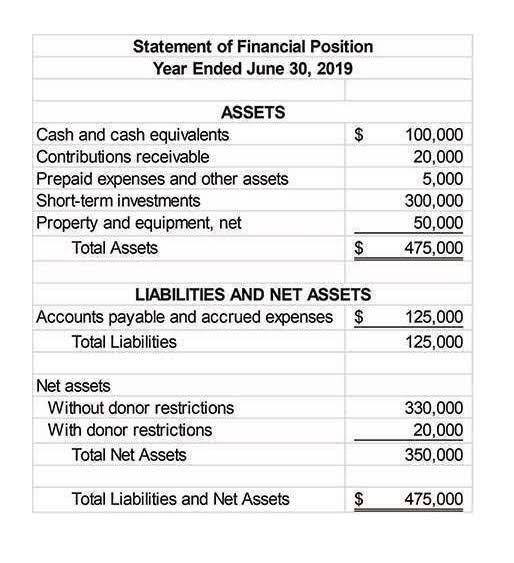
Also, businesses must choose a registered agent in the state where they incorporate. The last section of activities of a firm are the financing activities. Although these are also not usually part of the day-to-day operations of a firm, the financing activities play an important in ensuring the long-term financial health of a firm. In some cases, the operating activities section of a statement of cash flow is negative. If the amount is negative, that means the company is using/spending more cash than it is bringing in specific to business operations. This also means the company must rely on the other two sections to ensure enough cash flow is coming into the company to maintain operations.

Chapter 9: Forms of Market
Profits and losses that bypass inside the owners come out as personal taxes, resulting in taxation on the individual level. The subsidiary corporation is restricted to 100 shareholders or less; all shareholders must be U.S. citizens or residents. However, it is essential to note that profits made by corporations are subject to double taxation. This means that dividends paid to proprietors are also subject to taxation at the individual level. Bookkeeping for Consultants This article deals primarily with the large private business organizations made up chiefly of partnerships and limited-liability companies—called collectively business associations. Some of the principles of operation included here also apply to large individually owned companies and to public enterprises.
- One of the main advantages of C corporations is that they can be owned by entrepreneurs who live outside the US.
- Most firms will not operate as a sole proprietorship as this means the individual is personally liable for faults of the firm.
- Business economics helps in establishing and executing an efficient communication system.
- A corporation is a type of legal entity that’s recognized by the state, owned by individuals, other entities, or shareholders, whose goal is to make a profit.
- It involves analyzing both internal and external factors that affect business performance.
- The minimum capital requirement is 1 USD, making this form attractive for small businesses and startups.
Business Economics Objectives

If a corporation has a sole owner and he dies, who owns the corporation? The question of choice arises because the basic resources such as capital, land, labour, and management are limited and can be employed in alternative uses. Environmental factors have signicant influence upon the functioning and performance of the business. On the other hand, economics is related to the optimum allocation of limited resources for attaining the set objectives of organisations. The management discipline focuses on a number of principles that aid the decision-making process of organisations. Business Economics, also referred to as Managerial Economics, generally refers to the integration of economic theory with business practice.

Now, it performs demand forecasting to evaluate its market penetration rate. Next, the firm computes estimated equipment https://4wall.com.mx/2025/08/05/cook-county-illinois-property-taxes-2025/ and labor costs and executes production analysis to exploit the available resources. Valuation is the root of the company’s earnings since its success is mostly based on the accuracy of costing decisions. Moreover, the key aspects incorporate pricing methods, price discovery in numerous market forms, product line pricing, and differential pricing. It is important to comprehend the nature of business economics, which is closely related to normative economics.
- Corporations have easier access to financing compared to individuals or other business structures.
- Macro-economics provides an intelligent understanding of the environment in which the business operates.
- The selection of a suitable business structure necessitates careful consideration of various factors, including the nature of the business, growth aspirations, and the regulatory environment.
- Even though corporations are vital engines of economic growth, they also face criticisms regarding their environmental impact, influence on public policy, and the concentration of wealth and power.
- Interest rates are typically lower, employment rates rise, and consumer confidence strengthens.
Corporations offer several key benefits that support business growth and ensure long-term stability. Get stock recommendations, portfolio guidance, and more from The Motley Fool’s premium services. Issued by the U.S. government to raise money, T-bonds what is a corporation in economics should have a place in your portfolio. More money has been lost waiting to buy stocks than in holding stocks through downturns. Upgrading to a paid membership gives you access to our extensive collection of plug-and-play Templates designed to power your performance—as well as CFI’s full course catalog and accredited Certification Programs. Access and download collection of free Templates to help power your productivity and performance.